
Guide · Journals
How to get a research journal issue printed
What to send, how proofs work, and what changes the cost, explained the way we would on a first call with a journal editor.





Some of the journals we design and print. Editorial content belongs to each journal.
Most journal editors don't do this often. An issue comes together once a quarter or twice a year, and in between there is peer review, author corrections and a hundred other things. So when the articles are finally accepted and it is time to print, the same questions come up every time: what do we send, how long will it take, and what will it cost?
We design and print journals for universities, medical colleges and research societies, including the Annals of King Edward Medical University, JPSIM, Esculapio, JAIMC and MedERA. This guide is what we would tell any editor on the first call.
What to have ready before you contact a printer
You don't need everything finished to ask for a quote. But the closer you are to this list, the faster and more accurate the answer will be. Tick them off as you go:
If your journal already has a designer and you only need printing, send the print-ready PDF instead. If you only need design and layout and will print elsewhere, that works too. The two stages can be separate.
The five steps from articles to bound copies
Content and requirements
You send the approved articles and issue details. Nothing is changed in the wording: the text is what your editorial team accepted. This can all happen online. Many of our journal clients never visit the press, though you are always welcome to come and see your issue being printed.
Design and layout
The articles are typeset to your journal's style: headings, references, tables, figures and page numbering. The cover and masthead are designed, or the existing ones are updated for the new issue. For a journal's first issue, this is also when the recurring look is set, so later issues stay consistent.
Proofs and corrections
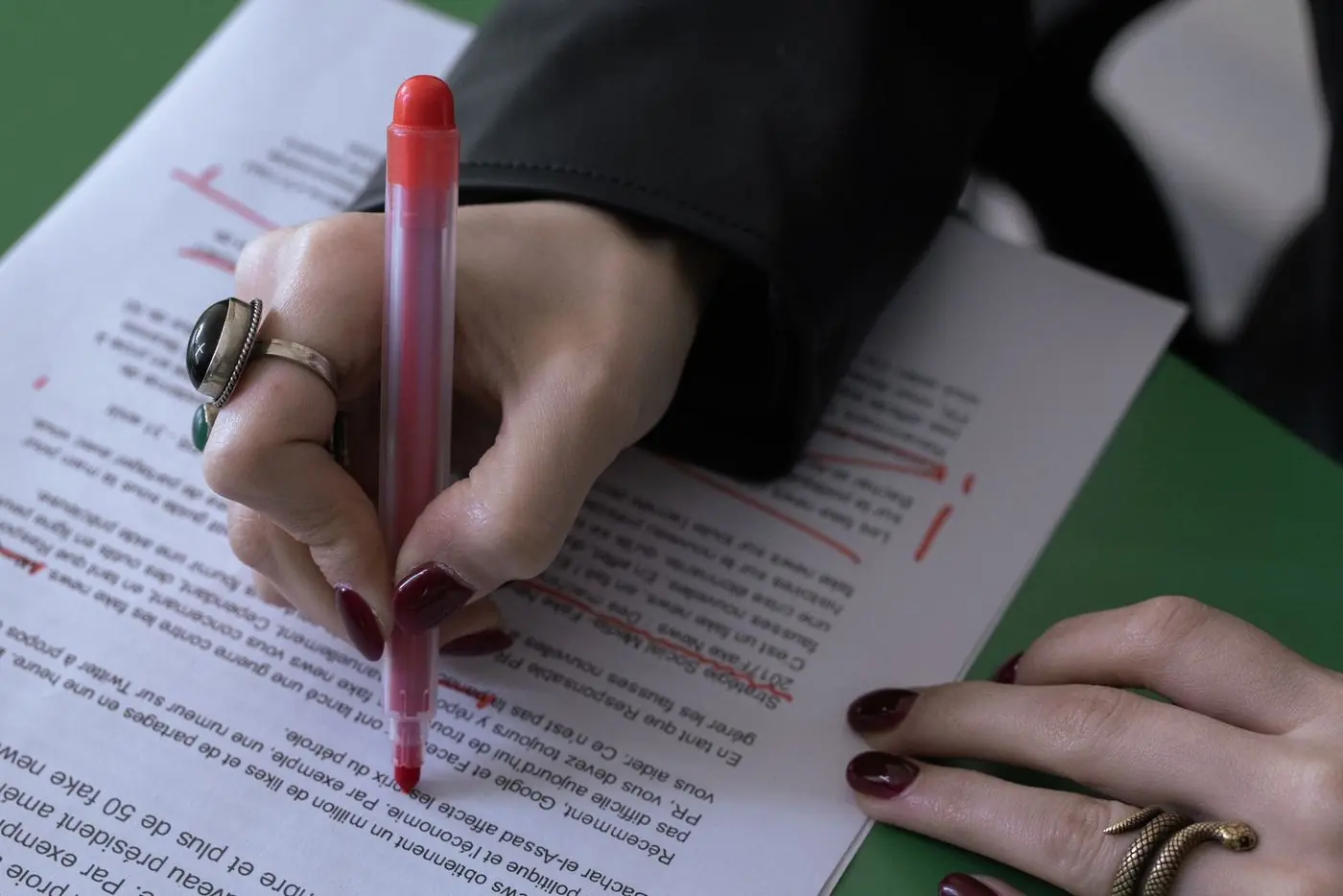
You receive a proof of the full issue. Your team checks article order, author names, figures, page numbers and the cover. Corrections go back, a revised proof comes out, and this repeats until it is right. Budget time for this: it is usually the step that takes longest, because it depends on authors and editors replying.
Approval, then printing
Nothing goes to press until the responsible person approves the final proof. Then the paper, colour and quantity confirmed in the quotation are printed. For a typical journal run, offset printing gives consistent quality and a lower cost per copy. For a handful of copies, digital printing makes more sense. Our offset or digital guide explains the difference.
Binding and delivery
Printed sheets are folded, gathered in page order and bound, either gum (perfect) bound or stitched. Covers are often laminated to protect them, then copies are trimmed, counted, packed and delivered.
What affects the cost of printing a journal
There is no single price for "a journal", because every issue is different. The biggest factor is the number of pages, and the reason is how printing works: pages are not printed one at a time, but in sets on a large sheet that is then folded into a section.
That's why a page count that fills complete sections costs less per page than one that leaves part of a sheet empty. The other things that change the quote:
Number of copies
With offset printing, the setup cost is spread over the run, so the cost per copy drops as the quantity goes up.
Colour
Black-and-white inside pages cost far less than full colour. Many journals print the cover in colour and the inside in black, with colour only where figures need it.
Paper
The thickness and finish of the inside pages and of the cover.
Binding and finishing
Gum or stitch binding, and whether the cover is laminated.
Design work
Full typesetting and cover design, or print-ready files you supply.
Delivery
Where the copies need to go, and how many addresses.
A good quote lists each of these, so you can see where to adjust if the budget is tight.
Gum or stitch binding: which suits your journal?
Most journals are gum bound, but a thin issue can be stitched. The page count usually decides it:
Gum (perfect) binding
- Sections are glued into a flat spine, with a wraparound cover
- The spine can carry the journal name, volume and issue
- Suits thicker issues; there must be enough pages to form a spine
Stitch binding
- Folded sheets are nested and stapled through the fold
- Opens flatter, and is economical for thin issues
- The page count works in multiples of four
What a printer does not do
This matters for journals, and a trustworthy printer will say it plainly. Our work begins with content your team has already approved and ends with printed, bound copies:
We handle
- Cover and interior layout
- Typesetting to your journal's style
- Proofs and corrections
- Printing, binding and delivery
Your editorial team keeps
- Accepting articles and peer review
- DOI and ISSN
- Indexing
- Every editorial decision
Planning your next issue
Work backwards from the date you need the copies. Leave room for at least two rounds of proof corrections, then printing and binding. Send the printer your page estimate and quantity early, even before the articles are final, so paper and press time can be planned.
- Articles final
- Proof rounds at least two
- Final approval
- Printing
- Binding & packing
- Copies in hand start planning here
Questions editors ask
Before you
send your issue.
How can I get my journal printed?
Send the printer your approved articles, issue details, journal logo or previous cover, an estimate of pages and copies, and the date you need them. The printer typesets and designs the issue if needed, sends proofs for your approval, then prints and binds the copies.
How much does it cost to print a journal?
It depends mainly on the number of pages, number of copies, colour, paper and binding. Ask for a quotation that lists each of these, so you can see what changes the price.
Why does the page count matter so much?
Pages are printed in sets on large sheets that are folded into sections. A page count that fills complete sections costs less per page than one that leaves part of a sheet empty.
What binding do journals use?
Most journals use gum (perfect) binding, which gives a flat spine with the title printed on it. Thin issues can be stitch bound, stapled through the fold.
Does the printer provide ISSN, DOI or peer review?
No. These belong to the journal's publisher and editorial office. The printer works from content the journal has already approved.
Do we have to visit the press?
No. Articles, proofs and approvals can all be handled online, and many journal clients never visit. You are always welcome to come and see your issue being printed.
Can we get only the design, or only the printing?
Yes. Design and printing can be ordered together or separately.
Planning the next issue?
Send us the page count, copies and your date.
We will come back with the design, printing and binding scope and a quotation. Design work can be done remotely, and you are welcome to visit the press.
